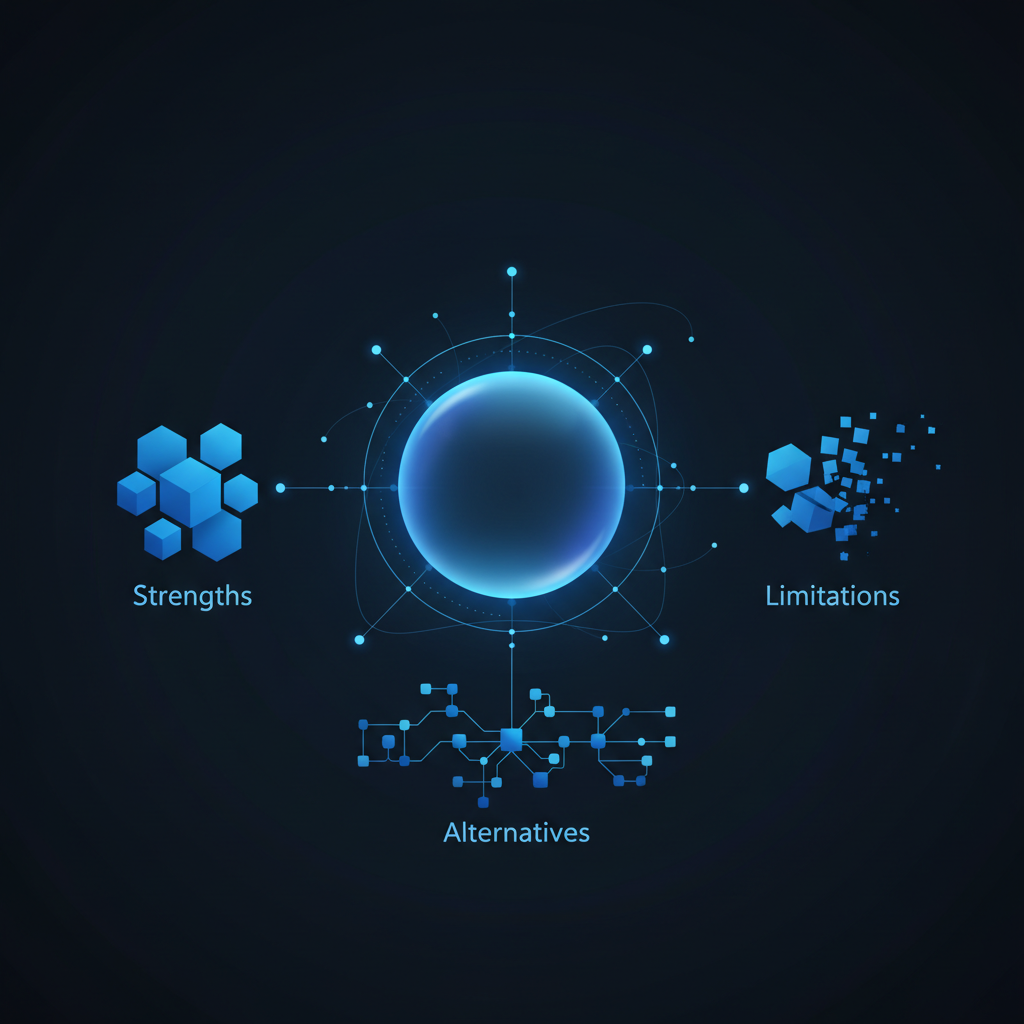
Lovable Analysis: Strengths, Limitations, and the Alternatives That Make More Sense for Real Products
Lovable is good at getting an idea on screen fast. The harder question is what happens after the first impressive demo — when bugs, billing, edge cases, and production reality show up.
By Bart
What is Lovable?
Lovable (formerly GPT Engineer) is an AI-powered full-stack web application builder. This "Vibe Coding" platform generates React, Vite, and Tailwind CSS-based web apps from natural language prompts alone, achieving explosive growth with $13.5 million ARR just three months after its November 2024 launch.
In July 2025, Lovable raised $200 million in Series A funding led by Accel, reaching an $1.8 billion valuation. As of March 2026, it boasts 2.3 million monthly active users (MAU), 180,000 paying subscribers, and $75 million ARR, all managed by a team of just 45 people.
Lovable's core concept is an "AI Full-Stack Engineer." When users explain "build me a client portal with login functionality," the AI automatically generates a working application including frontend (React), backend (Supabase), database, and authentication system. Code syncs automatically to GitHub with one-click deployment available.
Lovable claims to be "20x faster than traditional coding," emerging as a tool that dramatically accelerates prototype and MVP development.
Key Strengths of Lovable
1. Remarkable Development Speed
Lovable's greatest strength is speed. It compresses work that would take weeks through traditional development into minutes or hours. Simple landing pages or CRUD apps generate instantly with a few prompts, and even complex projects can produce working prototypes within a day.
As a real-world example, non-technical founder Sabrine Matos used Lovable to develop "Plinq," a women's safety app, without writing a single line of code. The app now has over 10,000 users and generates $456,000 in annual revenue.
Lovable is designed for people with zero coding knowledge to build web applications. You simply explain to the AI conversationally in natural language, enabling founders, product managers, and designers to directly implement their ideas. This dramatically lowers the barrier to entry for app development.
3. GitHub Integration and Code Ownership
Code generated by Lovable automatically syncs to GitHub repositories. This means code ownership belongs to users, somewhat mitigating platform dependency. Developers can download code to modify directly or collaborate with team members.
4. Automatic Supabase Backend Integration
Lovable tightly integrates with Supabase (open-source Firebase alternative). With prompts alone, it automatically configures PostgreSQL databases, user authentication (login/signup), file storage, and server-side logic. This drastically saves time spent building backend infrastructure.
5. Visual Editor
When stuck working with prompts alone, you can use Lovable's Visual Editor. Similar to Figma, you can click UI elements to directly adjust colors, sizes, spacing, making fine-tuning of AI-generated code easy.
6. Developer Productivity Tool
Even skilled developers use Lovable. They let AI generate repetitive boilerplate code (buttons, forms, page layouts) while developers focus on complex business logic. It serves as an accelerator tool that significantly saves UI scaffolding time.
Limitations of Lovable
1. Unpredictable Credit-Based Costs
Lovable's biggest problem is its credit-based pricing structure.
Free Plan: 5 credits/day (30 max/month), public projects only
Pro Plan: ~$25/month (more credits, private projects, custom domains)
Business Plan: ~$50/month (more credits, SSO)
The issue is that credit consumption is highly irregular. Simple UI adjustments consume 0.5 credits, but complex feature additions burn 2-3+ credits. As projects become more complex, iterative modifications and bug fixes rapidly deplete credits.
Users describe this as a "Credit Trap." While building quickly, credits explosively consume during debugging phases, resulting in costs far higher than expected. For production-level apps, monthly costs can surge into hundreds of dollars.
2. Insufficient Production Quality (60-70% Solution)
While Lovable excels at prototypes and MVPs, it falls short for production-level app development. Multiple independent reviews assess Lovable-generated apps as "60~70% complete."
Initial generation is fast, but completing the remaining 30% requires far more time and effort than anticipated. Specific problems include:
Code Quality: Structure without scalability consideration. Inflexible data structures and tangled logic make later modifications difficult.
Technical Debt: Small feature changes can cascade into massive code rewrites.
Security: Production-level security features (RBAC, encryption, audit logs) are insufficient or incomplete.
Many teams adopt a strategy of building prototypes with Lovable, then having professional development teams completely rebuild for actual production.
3. AI "Hallucination" and Debugging Loops
AI-generated code can contain bugs. The problem is Lovable's AI frequently gets trapped in "debugging loops."
Users request bug fixes.
AI reports "fixed," but actually isn't fixed or creates new bugs.
Repeatedly requesting fixes for the same bug while only consuming credits.
These "hallucination" issues frustrate users, ultimately requiring manual code fixes in many cases.
4. Complex Business Logic Implementation Limits
While Lovable handles standard patterns like CRUD (Create, Read, Update, Delete) well, complex custom logic or special business requirements are difficult to implement.
For such requirements, Lovable is just a starting point, professional developers ultimately need to rewrite most code.
5. Scalability Problems
Code generated by Lovable is designed without considering long-term scaling. As users grow or features become complex, performance issues are likely.
Insufficient database query optimization
Inefficient data structures
Non-modularized code
As startups grow, maintaining or scaling Lovable apps becomes increasingly difficult, eventually facing situations requiring complete rebuilds.
6. Web Apps Only (Not Native Mobile Apps)
Lovable is a web application builder. It can create React-based web apps or PWAs (Progressive Web Apps), but not true native mobile apps (iOS, Android).
If you need apps to publish on mobile app stores, Lovable isn't suitable.
7. Security Vulnerabilities
An April 2025 Guardio Labs report discovered serious security vulnerabilities in Lovable. Named "VibeScamming," the issue reveals Lovable can be exploited to generate phishing websites (e.g., pixel-perfect replicas of Microsoft login pages).
This demonstrates inherent risks of AI code generation platforms rather than just the tool itself.
The Production-Grade Alternative: AppBuildChat
AppBuildChat takes a completely different approach from Lovable. While Lovable is a "DIY AI tool for building yourself," AppBuildChat is a "managed production service where experts build for you."
How Does AppBuildChat Work?
Chat with AI bot: Users describe their desired app through conversation with an AI chatbot.
Automatic PRD generation: AI generates a structured Product Requirements Document (PRD) based on the conversation.
Review app preview: Preview the app for free.
Professional engineers and designers after payment: Upon payment, a development team reviews and refines the PRD, while a design team creates a cohesive design system. Together, they build a real mobile app.
App Store launch within 7 days: Delivers production-ready apps launchable on App Store and Google Play within 7 days.
AppBuildChat's Core Differentiators
1. Production Quality Guaranteed
While Lovable is a 60~70% solution, AppBuildChat delivers 100% production-level apps.
Professional engineering teams guarantee code quality, security, and scalability.
Users don't need to solve "the remaining 30%" themselves.
2. Real Mobile Apps
While Lovable only supports web apps, AppBuildChat is designed from the ground up for mobile app production.
Creates apps that can actually be published to iOS and Android app stores.
Not web apps, not PWAs, not wrapper apps.
3. Managed Service, Not DIY
Lovable requires users to write prompts, debug, and modify code themselves.
AppBuildChat's professional engineering team validates requirements, refines edge cases, and builds production-level apps.
Users only need to explain "what they want." The "how to build it" is handled by experts.
4. Predictable Fixed Cost
Unlike Lovable's credit system, AppBuildChat charges a fixed subscription of $299/month.
This includes hosting, backend infrastructure, monitoring, and maintenance.
No risk of sudden credit depletion or cost explosion.
5. Zero Learning Curve
Lovable requires prompt engineering skills and practice for good results.
AppBuildChat has nothing for users to learn. Explain requirements via chat and you're done.
6. 7-Day Launch Guarantee
Building with Lovable yourself produces quick prototypes but takes weeks to months for production.
AppBuildChat delivers completed apps within 7 days according to the PRD.
Who Should Use AppBuildChat?
AppBuildChat is optimal for:
Need real production apps, not prototypes: Built prototypes with Lovable but realized actual customer delivery requires rebuilding
Founders disappointed by outsourcing quotes: Received $50K-$100K quotes but want real apps quickly at reasonable prices
No time/capability to build yourself: Business owners, founders without time and technical skills to learn and develop with Lovable
App store launch is the goal: Need mobile apps to actually launch on App Store and Google Play
Prefer predictable costs: Want to manage with fixed fees without unexpected cost explosions like credit consumption
Lovable vs AppBuildChat Comparison
Category
Lovable
AppBuildChat
Approach
DIY AI code generation tool
Managed production service
Primary Output
Web apps (React + Vite)
Real mobile apps
User Role
Write prompts, debug, modify code
Only explain requirements
Learning Curve
Medium (prompt engineering required)
None
Development Speed
Prototype fast (minutes~hours)
Production app in 7 days
Completion
60-70%
100% production-level
Quality Assurance
None (relies on AI output)
Professional engineer verification
Web Apps
Strong
Not supported (mobile only)
Mobile Apps
Not supported (PWA only)
True apps
Pricing Structure
Credit-based ($25~$50/month+)
$299/month fixed
Cost Predictability
Very difficult
Easy (fixed fee)
App Store Publishing
Impossible
Included
Code Ownership
GitHub sync possible
Limited
Maintenance
Self-managed (difficult)
Managed by professional team
Scalability
Low (rebuild likely needed)
Medium
Complex Logic
Limited
Limited (defined backend stack)
Debugging
Difficult (loops occur)
Handled by experts
Recommended For
Web app prototypes, MVP validation
App store-ready mobile apps
Finding the Right App Development Solution for You
When to Choose Lovable
Lovable is suitable in these situations:
Quick prototype/MVP validation: When quickly testing ideas and getting user feedback. When validation at "will this work?" level is the goal rather than actual production.
Web application goals: When web-based services like dashboards, internal tools, landing pages are needed.
Developer productivity tool: When skilled developers want to accelerate UI boilerplate work. Generated code can be exported for direct modification.
Extremely limited budget: Can start testing with the free plan (5 credits/day).
Caution: While Lovable excels at prototypes, attempting to complete production-level apps with Lovable alone is not recommended. You're likely to encounter greater difficulties than expected in the remaining 30% after 60~70% completion.
Many teams adopt a "Lovable for prototype → production rebuild with different stack after validation" strategy.
When to Choose AppBuildChat
AppBuildChat is optimal in these situations:
Actual app store launch is the goal: Need mobile apps to actually launch on App Store and Google Play
Need production beyond prototypes: Built prototypes with Lovable but need customer-ready apps
Agency quotes are burdensome: Received $50K~$100K quotes but want faster, cheaper alternatives
No time/capability to build yourself: Business owners, founders without time and technical skills to learn and develop with Lovable
Production quality matters: Need stable apps deliverable to actual customers, not 60-70% solutions
Prefer predictable costs: Want to manage with fixed fees without unexpected cost explosions like credit surges
Conclusion: Prototype vs Production
Ultimately, the choice is "validate with prototype vs launch production app quickly."
Lovable excels at idea validation, investor demos, and user feedback collection stages. But actual production needs separate planning.
AppBuildChat is suitable for those wanting to skip the prototype stage and directly launch production-level mobile apps to market.
If considering web app development with Lovable, clarify whether your goal is "prototype" or "production." If production is the goal, we recommend trying AppBuildChat first. Generating a PRD through conversation with the AI chatbot and checking the app preview is free, allowing you to judge how well the managed service fits your needs.
Outsourcing app development used to mean “find a cheaper team overseas.” In 2026, the better question is simpler: which model gets you a real app in users’ hands without turning you into a full-time project manager?